

How can this event help me?
"Why does my jaw hurt?"
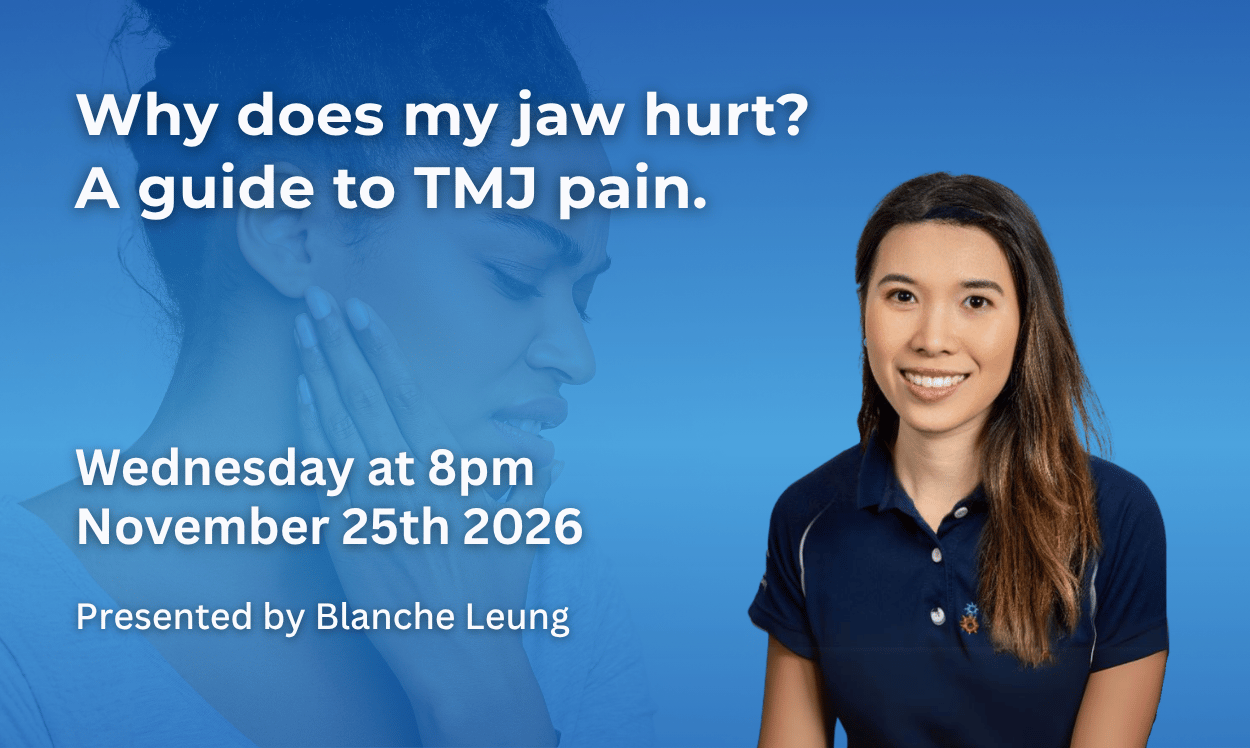
Sometimes it’s not as simple as a problem with the jaw itself. Jaw pain can involve the muscles, joints, teeth, neck, nervous system, movement patterns, stress, and even the way we use our jaw throughout the day. For people living with temporomandibular joint (TMJ) conditions, hypermobility, or persistent pain, understanding these connections can help make sense of why symptoms flare, change, or sometimes seem difficult to explain. In this live online session, Physiotherapist Blanche Leung will explore the many factors that can contribute to TMJ pain and dysfunction. She’ll discuss how the jaw joint and surrounding muscles work, why clicking and popping don’t always mean something is “wrong”, how hypermobility can influence jaw movement and stability, and how the neck, posture, breathing, clenching, and nervous system can all play a role in jaw symptoms.
Join Blanche for an engaging and practical discussion covering:
What’s actually happening in TMJ pain? Explore the different structures involved in jaw pain, including the jaw joints, muscles, nerves, and surrounding areas, and why symptoms can vary from person to person.
Hypermobility and the jaw: Learn how increased joint mobility can influence jaw movement, muscle control, stability, and sensitivity, and what this may mean for people with hypermobility.
Clicking, popping and locking: Understand what different jaw noises and movement changes may mean, when they are common, and when they may warrant further assessment.
It’s not just about the jaw: Explore how the neck, posture, breathing, clenching, chewing habits, sleep, stress, and nervous system sensitivity can interact with jaw symptoms.
What can I actually do about it? Learn practical strategies for managing jaw pain, including movement, exercise, load management, relaxation, and everyday habits that can help support more comfortable jaw function.
Putting the pieces together: Take a broader look at TMJ symptoms and learn how understanding the different factors involved can help you feel more confident managing your jaw, rather than simply trying to “fix” one structure.
This session is designed for people living with TMJ pain or dysfunction, particularly those with hypermobility or persistent musculoskeletal pain. Whether your jaw clicks, aches, feels tight, gets stuck, or simply doesn’t feel quite right, join Blanche for an informative and interactive session exploring the question: "Why does my jaw hurt?"