

Hypermobility
.png?width=1280&height=720&name=Protein%20Do%20You%20Really%20Need%20More%20(header).png)

Protein is one of the most common topics that comes up when we talk about nutrition, especially for people living with arthritis and other rheumatic conditions. There is often confusion about how much you need, whether you are getting enough, and how protein fits into an overall anti-inflammatory way of eating.
The goal is not simply to increase protein intake. It is about understanding what your body needs and finding a way to meet those needs consistently and practically.
Protein plays a much broader role than just building muscle. This becomes particularly important when living with a chronic condition.
From around the age of 40, muscle mass naturally declines. This process can accelerate in inflammatory conditions such as rheumatoid arthritis. Maintaining muscle is essential for supporting joints, improving balance, and reducing the risk of falls.
Protein also supports the repair of muscles, tendons, and joints. The body is constantly breaking down and rebuilding tissue, and adequate protein intake helps this process happen more effectively.
There is also a link between protein and inflammation. Certain protein-rich foods such as fatty fish and plant-based sources provide nutrients that can help regulate inflammatory processes in the body.
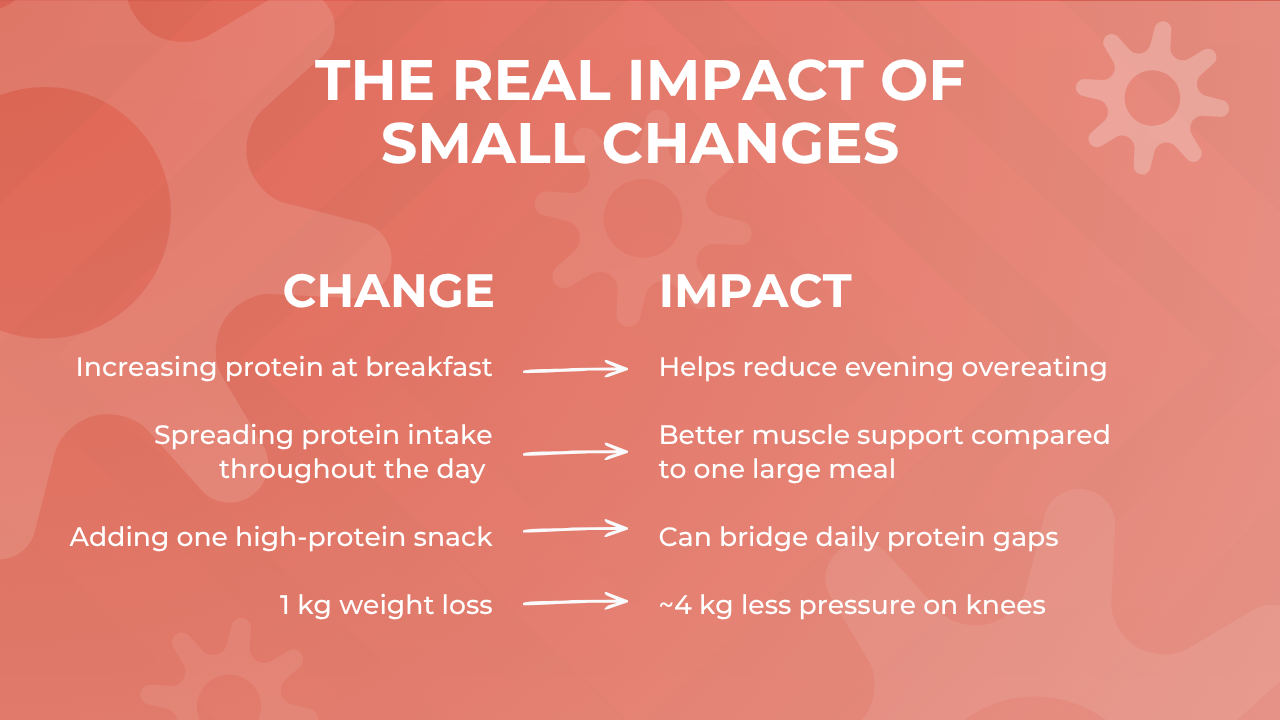
For those managing osteoarthritis, protein can also support weight management. It helps you feel fuller for longer and stabilises energy levels. Even small changes can have a meaningful impact. Losing one kilogram of body weight can reduce approximately four kilograms of pressure on the knee joints.
Protein also plays a role in immune function, supporting the production of antibodies and overall immune health.
Protein needs vary depending on age, activity levels, and health status.
For the general population, the baseline recommendation is 0.8 grams per kilogram of body weight per day. For many people living with rheumatic conditions, a higher intake is often more appropriate.
A practical target is around 1 gram per kilogram of body weight per day.
|
Body Weight |
Minimum (0.8 g/kg) |
Target (1.0 g/kg) |
|
60 kg |
48 g |
60 g |
|
70 kg |
56 g |
70 g |
|
80 kg |
64 g |
80 g |
As a general guide, most people will fall within a range of 50 to 70 grams per day.
For those following vegetarian or vegan diets, it is important to aim for at least 45 grams per day to reduce the risk of inadequate intake.
A helpful way to approach protein is to think in portions of approximately 10 grams. This makes it easier to build meals across the day without needing to track every detail.
|
Food |
Portion |
Protein |
|
Cooked chicken, beef, fish |
40 to 45 g |
~10 g |
|
Cooked meat or fish |
100 to 120 g |
20 to 30 g |
|
Eggs |
2 eggs |
~10 to 12 g |
|
Milk |
1 cup |
~8 to 10 g |
|
Greek yogurt |
¾ cup |
~10 g |
Animal-based proteins are generally more concentrated, which can make it easier to meet daily targets.
|
Food |
Portion |
Protein |
|
Lentils or chickpeas (cooked) |
¾ cup |
~10 g |
|
Tofu |
100 g |
~10 g |
|
Edamame |
½ cup |
~10 g |
|
Nuts |
¼ cup |
~10 g |
|
High-protein plant milk |
1 cup |
up to 10 g |
Plant-based options may require slightly larger portions, but they also provide fibre and additional nutrients that support overall health.
When protein is spread across the day, it becomes much easier to meet your needs.
|
Meal |
Example |
Protein |
|
Breakfast |
Yogurt with milk or seeds |
10 to 15 g |
|
Lunch |
Chicken or tuna-based meal |
~20 g |
|
Dinner |
Fish or lean meat with vegetables |
20 to 30 g |
|
Snacks |
Nuts, seeds, or milk |
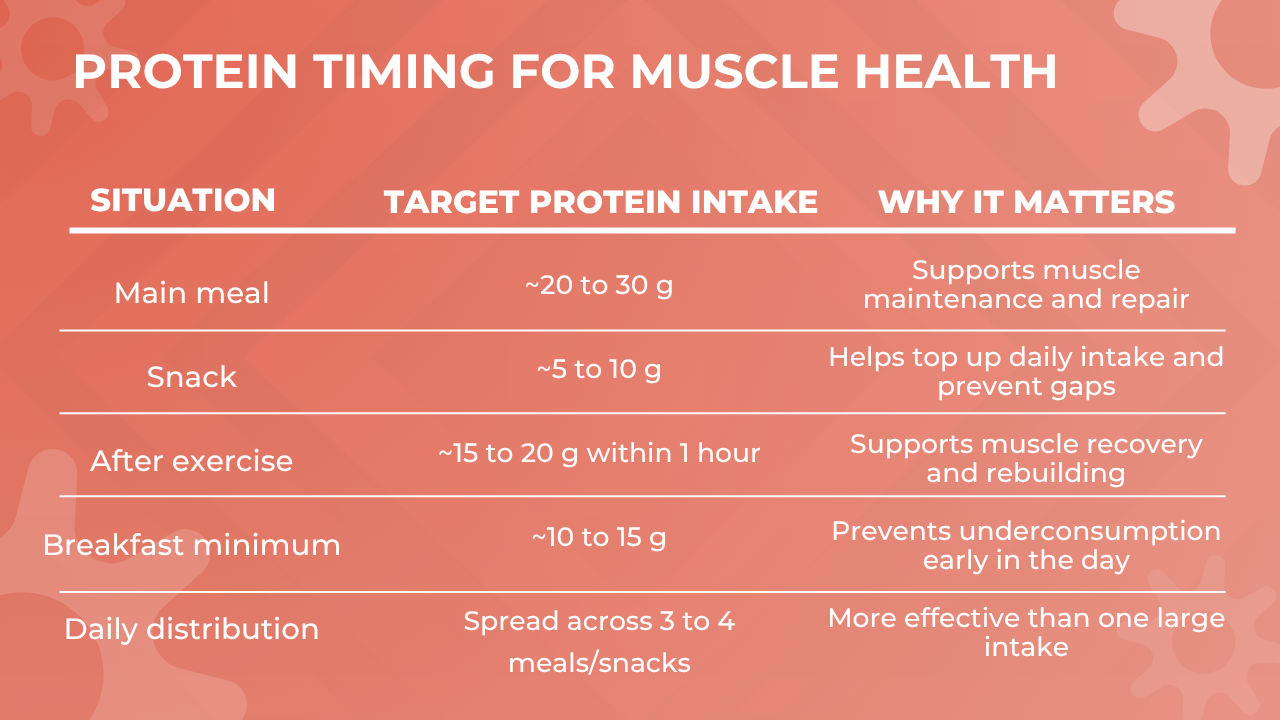
5 to 10 g |
This approach highlights an important pattern. Many people tend to under-eat protein earlier in the day and try to make up for it at dinner. By that point, appetite is often lower, especially if fatigue or pain is present.
Shifting protein intake earlier in the day can make a noticeable difference in both energy levels and overall intake.

The type of protein you choose also matters.
Fatty fish such as salmon, trout, and mackerel provide omega-3 fatty acids alongside protein. These have been associated with improvements in inflammation, joint pain, and stiffness. Including fish a couple of times per week can be beneficial.
Plant-based proteins such as legumes, tofu, nuts, and seeds provide fibre and antioxidants. These support gut health and may help regulate inflammatory processes.
Animal proteins can still be included, with a focus on lean options. Trimming visible fat and choosing a variety of sources can help maintain balance. Cheese can contribute to protein intake, though it is best consumed in moderation.
Protein intake is not only about total daily amounts. How it is distributed across the day also matters.
Spreading protein across meals supports muscle maintenance more effectively than consuming most of it in one sitting. This is particularly relevant if you are engaging in strength or resistance training.
After exercise, having protein within about an hour can help support recovery. It is also helpful to avoid long gaps between meals, especially on more active days.
Whole foods are often enough to meet protein needs. However, protein powders can be a practical option when appetite is low or intake is inconsistent.
Adding protein powder to a smoothie with fruit and ingredients such as chia seeds can provide around 15 to 20 grams of protein in an easy and accessible way.
It is important to choose products carefully and introduce them gradually, as some can affect digestion if used in large amounts too quickly.
More protein is not always better. Very high intakes are not necessarily beneficial and may lead to digestive discomfort or place unnecessary strain on the body over time.
Consistency is key. Meeting your protein needs regularly, with a mix of sources, is more effective than focusing on large amounts occasionally.

For people living with rheumatic conditions, protein needs are slightly higher than average but still very achievable. Aiming for around 1 gram per kilogram of body weight, spread across the day, is a practical approach.
Small, consistent changes such as including protein at breakfast, planning balanced meals, and choosing a variety of protein sources can support muscle health, joint function, and overall wellbeing over time.
 This article is based on Dietitian Monica Kubizniak's talk on Protein: Do You Really Need More? A Practical Guide for Rheumatic Conditions . You can access the full session and hear their complete insights by watching the full talk here.
.png?width=1280&height=720&name=Sleep%20and%20the%20Anxious%20Brain%20(header).png)