

Hypermobility
.png?width=1280&height=720&name=How%20to%20progress%20your%20exercise%20program%20(header).png)

By Robyn Yin and Sarah Comensoli, Exercise Physiologists, BJC Health
When people start exercising, they are usually hoping to feel stronger, improve their bone density, and build the fitness and stamina to move through daily life with more ease. They want stairs, shopping, travel, and time with family to feel manageable, not exhausting. Yet when the idea of progression comes up, especially for someone living with a chronic condition, it can feel intimidating or risky. In reality, progression is not about pushing through pain or making dramatic change. It is about small, thoughtful increases over time that gently help the body adapt and move you closer to those goals.
Our bodies adapt to what we ask of them. If you are already moving regularly, that’s fantastic. But repeating the exact same routine for months or years can lead to plateaus. Without progression, we gradually lose muscle strength, bone density, balance and coordination, and functional capacity. Over time, this can make walking slower, getting up from a chair harder, carrying groceries more tiring, increase fall risk, and reduce independence.
These changes often start subtly. Small, consistent challenges can slow or even reverse much of this decline. Incremental improvements over time lead to meaningful results.
Progressive overload is about gently increasing the challenge so the body has a reason to adapt. Muscles get stronger, tendons become more robust, bones receive a strengthening signal, and daily movement feels easier. It does not mean making every session harder. It means being intentional and gradual.
Progression can take many forms. Increasing repetitions, for example, from eight squats to ten, or ten wall push-ups to twelve. Weight or resistance can rise slightly, like moving from a 3 kg dumbbell to 3.5 or 4 kg. Duration or time can be extended, such as a 15-minute walk to 18–20 minutes, or holding a plank for 25 seconds instead of 20. Slowing the lowering phase of a squat, adding a pause, increasing range of movement, or introducing single-leg or multi-directional exercises are other ways to progress without heavier weights.
The beauty of progression is that there are options. If adding weight feels daunting, changing tempo or range of motion can be the next step.
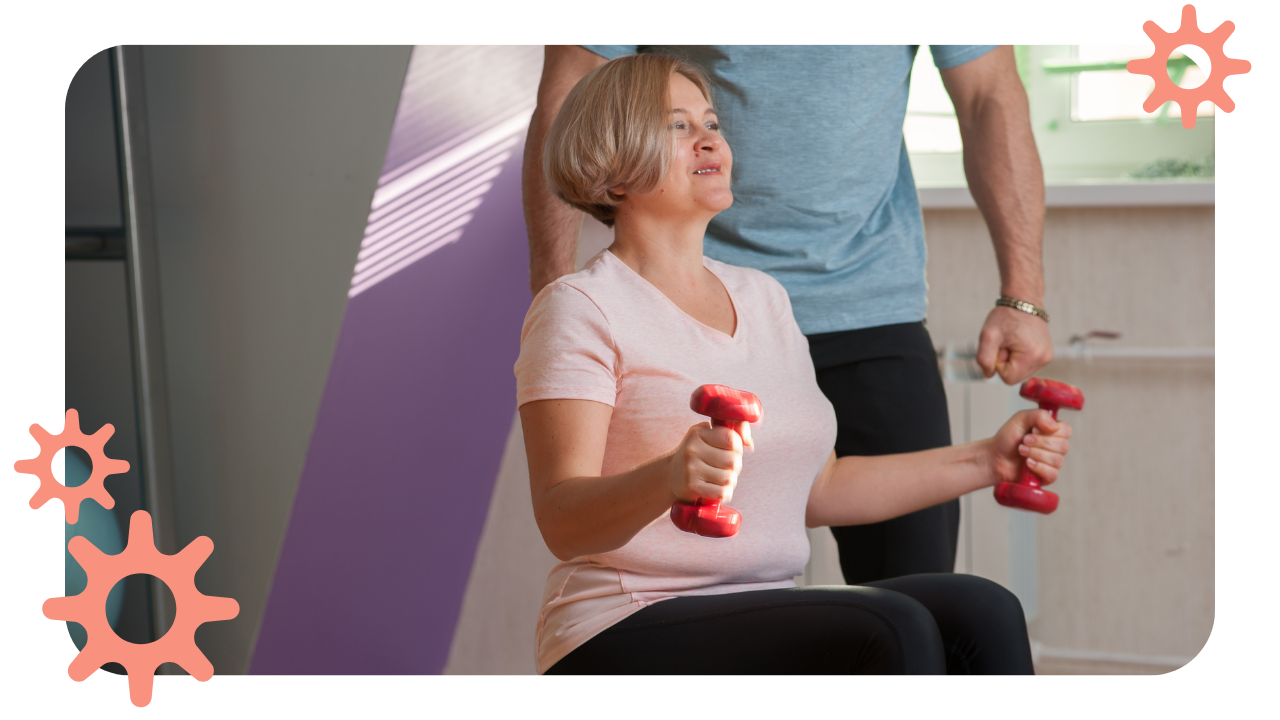 A Step-by-Step Progression Plan
Before changing anything, pause and reflect. Ask yourself..
What are my goals right now?
Can I be specific about what I want to improve?
Being clear about your goals helps ensure that progression is purposeful rather than arbitrary. In addition to getting your goals nice and clear, we also encourage clients to ask
How have the past 2–3 months been in terms of your exercise routine? Stable and consistent? Inconsistent? Affected by illness or flare-ups?
Feeling strong and ready to take the next step?
Let's now take you through our plan to help you navigate some progression!
Before progressing, make sure you perform each movement well. Good quality movement loads the right muscles effectively, improves balance and stability, reduces strain on joints and tendons, and lowers the risk of flare-ups or injury. Strong, controlled movement provides a solid foundation for safe progression.
Progression depends on recovery capacity. Consider your sleep, nutrition (including adequate protein), hydration, stress levels, and condition stability. Sleep, in particular, is critical. Chronic sleep restriction increases injury risk. If you are run down, stressed, or unwell, maintaining your current routine may be wiser than progressing.
Progressing one aspect of your exercise—repetitions, resistance, duration, tempo, range, or complexity—reduces overload and injury risk. Increasing weight, reps, and depth simultaneously often backfires, particularly for tendons and those with chronic conditions. Slow, steady change is more sustainable.
.png?width=1280&height=720&name=How%20to%20progress%20your%20exercise%20program%202(2).png)
Muscles and tendons respond better to small increments. For example:
🟠 10 reps to 12
🟠 a 20-second plank to 25 seconds
🟠 5 kg weights to 7 kg
Smaller increases help prevent severe delayed onset muscle soreness (DOMS) and are especially important for those managing chronic conditions, allowing tissues to adapt reliably.
It is normal to feel a bit sore, slightly more puffed during sessions, or a little tired afterward. It is not normal to experience sharp or worsening joint pain, persistent tendon pain, significant flare-ups, or fatigue that interferes with daily life. Muscles adapt relatively quickly, but tendons and bones adapt more slowly. Adjust if something feels off, and seek guidance if unsure. Consistency is the goal.
Muscle strength can improve within 2–4 weeks, tendons often take 8–12 weeks or longer, and bone density improves over months to years of consistent loading. If your goal is bone health, think long term. Steady, repeated signals over time are what matter.
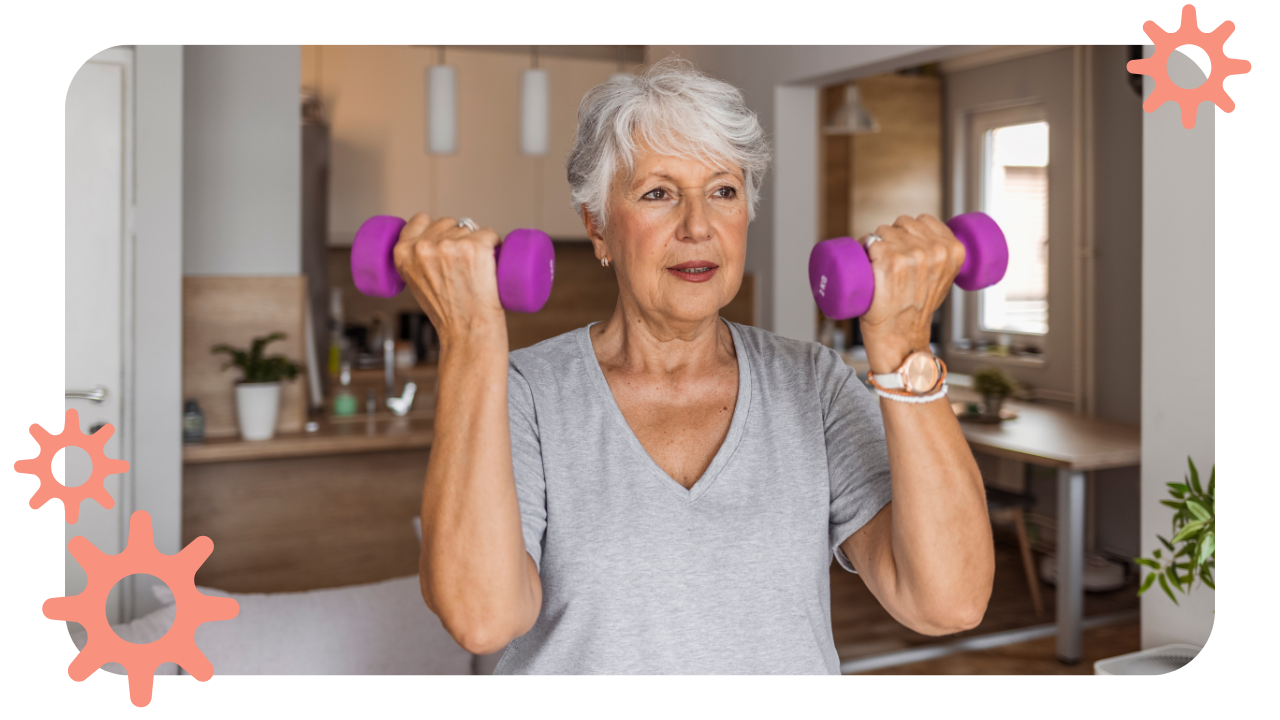
Adults in their 60s, 70s, and even 80s can still build strength, improve balance, and increase fitness. Resistance training becomes more important with age as it supports independence, reduces fall risk, and improves quality of life.
Regular, moderate exercise is more effective than occasional intense workouts. Two to three consistent sessions per week support strength, fitness, pain management, and functional capacity. Gaps and repeated restarts slow adaptation, but easing back gradually allows for steady progress.
Progression is not about proving anything. It is about gently expanding your capacity so daily life feels easier, not harder. If you are unsure how to progress safely, particularly if you are living with a chronic condition, the guidance of an Accredited Exercise Physiologist can make a significant difference. They can help you tailor progression to your goals, your condition, and your recovery capacity, so you build strength and confidence without unnecessary flare-ups. Small, consistent changes create meaningful long-term resilience, and having the right support can help you take those next steps with clarity and confidence.
 Learn more from Accredited Exercise Physiologists Sarah Comensoli and Robyn Yin’s presentation on how to progress your exercise program safely by watching the full talk here.
🤔 If you’re wondering whether it’s the right time to progress your exercise program, or you’d simply like some guidance on what the next step could look like, Robyn and Sarah are here to help. With personalised support and a plan tailored to your body and goals, you can build
strength gradually and confidently.

.png?width=1280&height=720&name=Sleep%20and%20the%20Anxious%20Brain%20(header).png)